
Embedded C vs Embedded Systems: Which Course Should You Choose?
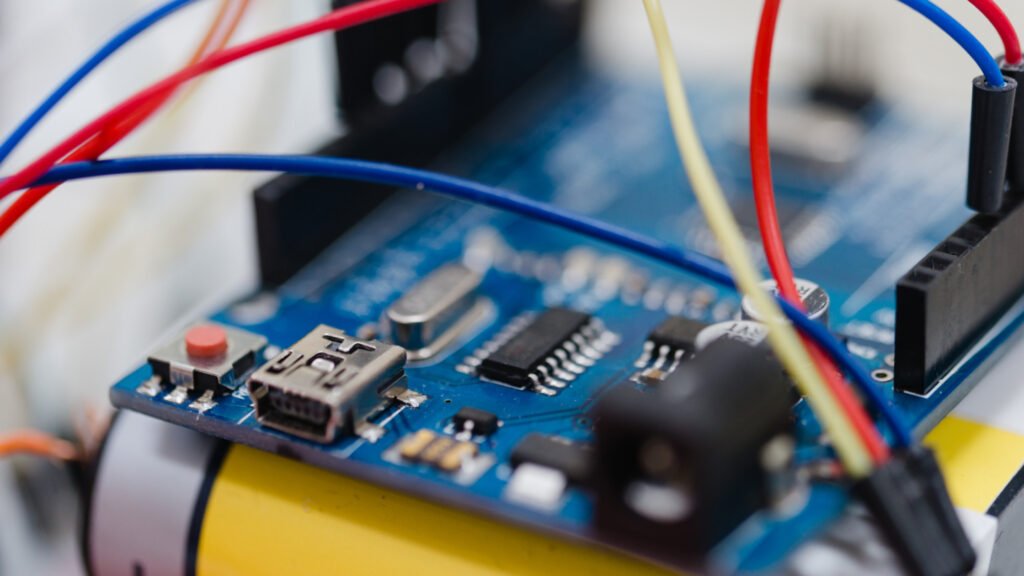
If you want a career in embedded technology, you will hit this question early: should you learn Embedded C, or enroll in a full embedded systems course?
The two names are often used interchangeably, but they are not the same thing. One is a skill. The other is an entire field.
This guide explains the difference, shows who should pick which path, and helps you decide with confidence.
What Is Embedded C?
Embedded C is the use of the C language to program small, resource-limited devices. These include the microcontrollers inside washing machines, car dashboards, glucose monitors, and smart meters.
It goes beyond ordinary C. You learn to:
- Read and write hardware registers directly
- Use bitwise operations to control pins
- Write interrupt service routines
- Work within tight memory and power limits
- Understand how the compiler treats volatile data
A focused Embedded C programming course teaches you how to talk to hardware through code. It is the most important single skill in firmware development.
What Is an Embedded Systems Course?
An embedded systems course covers the whole device, not only the code. It teaches how hardware and software are designed, connected, and tested together.
A typical syllabus includes:
- Microcontroller architecture (ARM Cortex-M, AVR, PIC)
- Embedded C programming
- Communication protocols: UART, SPI, I2C, CAN
- Real-time operating systems (RTOS)
- Sensor and actuator interfacing
- Debugging with logic analyzers and oscilloscopes
- Introductory PCB and hardware bring-up
When Embedded C Alone Makes Sense
A standalone Embedded C course works well in these cases:
You already code. If you know C or C++, you mainly need to learn how it behaves on hardware.
Your time is limited. A short course gets you writing real firmware quickly.
You want to test the waters. A smaller commitment lowers the risk if you are unsure about the field.
Your job needs a specific skill. Working engineers often just need to close one gap.
The limitation is context. Without system-level knowledge, you may struggle when a bug turns out to be a power, timing, or wiring problem rather than a code problem.
When Embedded Systems Is the Better Choice
A full program is the stronger pick if:
You are a fresher. Graduates in electronics, electrical, or computer science benefit from a structured path.
You are switching careers. A broad base helps you communicate with hardware and firmware teams.
You want wider job options. Roles such as firmware engineer, validation engineer, and embedded test engineer expect system-level understanding.
You want a strong portfolio. Employers value a working device far more than isolated code snippets.
The trade-off is time and cost, but the depth usually shows in interviews.
Three Questions to Help You Decide
- What is my current level?
If you have never used a microcontroller, start with the full program. If you are comfortable with C, a focused course may be enough. - Which role am I aiming for?
Firmware developer roles lean heavily on Embedded C. System integration and validation roles need broader knowledge. - How much time can I commit?
If you have a few months, go broad. If you need results fast, start narrow and expand later.
Why Many Learners Do Both
These two options are not rivals. Many engineers learn Embedded C first and widen their knowledge over time. Others choose an integrated program that teaches both together.
A well-designed course introduces C in the first few weeks and immediately applies it on real boards. You learn the language in context instead of in isolation.
To see what a structured roadmap looks like, you can explore our embedded systems course.
Where Embedded AI Fits In
Devices are no longer limited to reading sensors. Many now make decisions on their own using small machine learning models that run directly on microcontrollers.
This approach, often called TinyML, powers predictive maintenance, wake-word detection on wearables, and anomaly detection in factories. The TinyML Foundation is a good place to follow developments in this space.
That is why Embedded AI training in Bangalore is drawing interest from engineers who already have a solid embedded base. The key point is that edge AI sits on top of fundamentals. You must understand memory limits, power budgets, and real-time constraints before you can deploy a model on a tiny chip.
So the sensible order is clear: build core embedded skills first, then add AI. When you are ready for that step, our Embedded AI course shows how models are compressed and deployed on constrained hardware.
How to Choose a Training Institute
The institute matters as much as the syllabus. Many learners search for the Best embedded systems training institute in Bangalore, but a label like that tells you very little. Check these things instead:
- Lab time. Most of your hours should be spent on real development boards, not slides.
- Experienced trainers. People who have shipped products explain trade-offs better than pure academics.
- Current tools. Look for ARM Cortex-M, RTOS, and modern debuggers. Arm’s developer portal is a useful reference for what is current.
- Project work. You should finish with at least one complete project you can demonstrate.
- Career support. Ask about resume reviews, mock interviews, and referrals.
- Batch size. Smaller groups mean more attention from instructors.
If possible, visit the lab, speak to former students, and ask to see sample projects.
Why Internships Matter
Classroom learning only goes so far. Real embedded work involves unstable power supplies, noisy signals, and bugs that appear once every few hours.
An internship exposes you to these problems. Searching for a Top embedded systems internship in Bangalore is worthwhile because the city has a dense ecosystem of automotive, medical, industrial, and consumer electronics companies.
A good internship should offer:
- Real tasks on real hardware, not just observation
- A mentor who reviews your code
- A defined project with a clear outcome
- A certificate or reference that carries weight
You can also review our embedded systems internship program to understand what a structured one looks like.
Skills That Matter Whichever Path You Pick
Some habits separate strong embedded engineers from average ones.
Read datasheets. The answer to most hardware questions is already in the manufacturer’s document.
Debug methodically. Use a logic analyzer or oscilloscope instead of guessing.
Write safe code. Standards like MISRA C exist because embedded bugs can have physical consequences.
Know basic electronics. Ohm’s law, pull-up resistors, and signal levels help even software-focused engineers.
Keep building. A weather station or motor controller teaches more than any lecture. The design articles on Embedded.com are a good source of project ideas.
Common Mistakes to Avoid
Choosing by price alone. A cheap course without lab access wastes your time. Skipping fundamentals. Jumping straight into AI or IoT leaves dangerous gaps. Memorizing instead of building. Interviewers can quickly tell whether you have worked with hardware.
Ignoring protocols. UART, SPI, and I2C appear in almost every interview. Not documenting your work. Keep a GitHub repository with clear readme files and short videos of your hardware working.
Our Recommendation
Here is a simple rule of thumb. Beginners and recent graduates: choose a full embedded systems program that includes Embedded C. It gives you the broadest foundation and the strongest portfolio.
Experienced programmers and working professionals: a focused Embedded C course can make you productive quickly. You can add system-level topics later.
Engineers with a solid base: consider specializing in edge AI or IoT to stay ahead of the curve. For more help comparing options, read our guide to embedded career roadmaps or contact our team for personal advice.
Conclusion
Embedded C and embedded systems are not competing choices. One is a core skill, and the other is the larger field that skill belongs to. If you already code and want speed, start with Embedded C. If you want depth, flexibility, and the ability to build complete products, choose embedded systems.
Either way, put hands-on practice first. Pick trainers who have real industry experience, build projects you can show, and add an internship when you can. Once your fundamentals are strong, edge AI is a natural next step. The embedded industry rewards people who build things that work. Choose the path that gets you building sooner, and keep going from there.