
Best Embedded Systems Course in Bangalore: Complete Career Guide
Best Embedded Systems Course in Bangalore: Complete Career Guide
Every smartphone, car, smartwatch, medical device, and smart appliance runs on embedded systems. Behind each of these products is an engineer who wrote firmware, designed a circuit interface, or debugged a communication protocol. As more products become connected and intelligent, demand for skilled embedded engineers keeps growing, and Bangalore sits at the center of it.
If you are a fresher, a working professional, or an engineering graduate planning a career switch, choosing the right best embedded systems course in Bangalore can shape your first five years in the industry. This guide covers what embedded systems is, why Bangalore is the right city to learn it, what a good curriculum looks like, and how to pick a program that leads to a job.
What Are Embedded Systems?
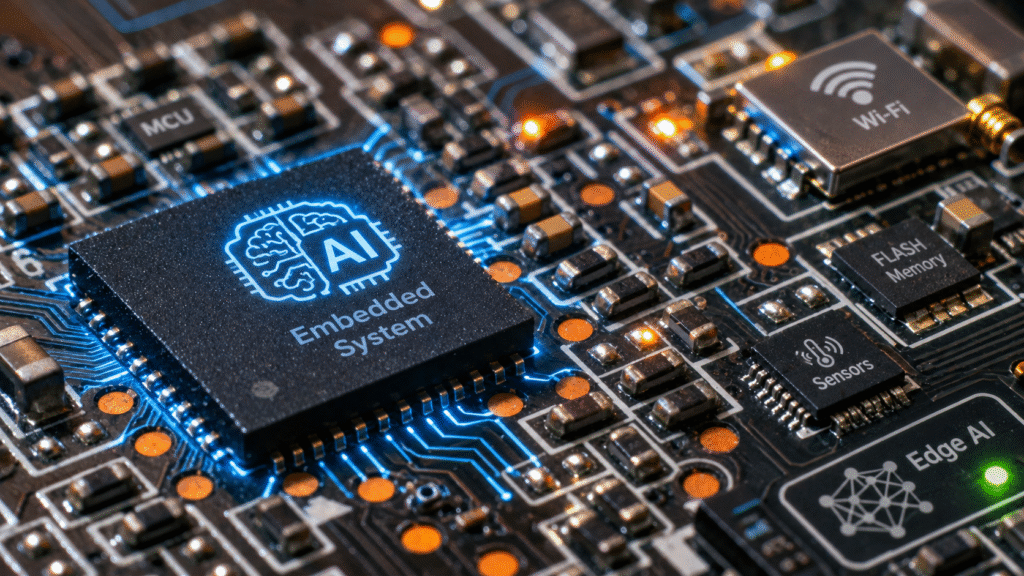
An embedded system is a combination of hardware and software designed to perform a specific function inside a larger product. Unlike a laptop, which runs many general-purpose applications, an embedded system does one job reliably: controlling the anti-lock brakes in a car, reading a heart-rate sensor, or managing the temperature in a washing machine.
Embedded engineers work with microcontrollers, sensors, real-time operating systems, communication protocols, and low-level programming languages. The work sits between electronics and software, so the role suits people who enjoy both.
Why Bangalore Is the Right Place to Learn Embedded Systems
Bangalore has long been India’s technology capital, and its embedded ecosystem is especially strong. The city hosts global semiconductor companies, automotive R&D centers, aerospace and defense organizations, IoT startups, and consumer electronics design teams. Many of them hire embedded engineers throughout the year.
For learners, this has practical benefits:
- Proximity to employers. Interviews, internships, and networking events are far easier when companies are a short commute away.
- Industry-aligned teaching. Trainers in Bangalore often come from working backgrounds in automotive, telecom, or semiconductor companies, so classroom examples reflect real projects.
- Peer community. Meetups, hackathons, and tech communities help you learn faster than studying alone.
According to NASSCOM, India’s technology industry continues to expand its engineering and R&D services, and embedded and IoT work is a significant part of that growth.
Who Should Take an Embedded Systems Course?
You do not need to be an expert before you start, but some background helps. These groups benefit most:
- Electronics, electrical, and instrumentation graduates who want to turn theory into job-ready skills.
- Computer science graduates who want to move closer to hardware and low-level programming.
- Working professionals in testing, support, or networking who want to move into core engineering.
- Final-year students who want practical project experience before campus placements.
If you know basic C programming and digital electronics, you can follow most beginner-level programs comfortably. Good institutes also cover fundamentals in the first few weeks so no one is left behind.
What a Good Embedded Systems Curriculum Should Include
Not every course delivers equal value. A strong program balances theory with hands-on practice. Look for these modules:
- C programming and data structures. C remains the primary language of embedded development. You should be comfortable with pointers, memory management, bit manipulation, and structures before touching hardware.
- Microcontroller architecture. Most programs use ARM Cortex-M based controllers such as STM32, because ARM-based chips power a large share of the market. The Arm developer documentation is a useful reference as you learn the architecture.
- Peripheral interfacing. This covers GPIO, timers, interrupts, ADC, and DAC, which are the building blocks of nearly every embedded product.
- Communication protocols. UART, SPI, I2C, and CAN are daily tools for embedded engineers. CAN is especially important if you are interested in automotive roles.
- Real-time operating systems (RTOS). Concepts such as tasks, scheduling, semaphores, and queues, usually taught with FreeRTOS, separate beginners from job-ready candidates.
- Embedded Linux basics. Many modern products run Linux on boards like Raspberry Pi or BeagleBone. Understanding device drivers, the boot process, and cross-compilation opens up more roles.
- Debugging and tools. Logic analyzers, oscilloscopes, JTAG/SWD debuggers, and version control with Git are skills that interviewers test directly.
- Capstone projects. A complete project, such as a smart home controller, a vehicle diagnostic tool, or an IoT health monitor, gives you something concrete to discuss in interviews.
How to Choose the Right Training Institute
With so many options, comparing institutes can feel overwhelming. A reliable software training institute in Bangalore should be able to answer the following questions clearly.
Who teaches the course? Ask about trainer experience. Instructors with industry exposure explain not only how something works but why it fails in production.
How much of the course is practical? Aim for programs where at least half the time is spent on labs. Reading about SPI is not the same as debugging a misbehaving SPI sensor at 11 pm.
Is the hardware available to you? Check whether you get development boards and lab access, and whether you can practice outside class hours.
What do past students say? Look for reviews on independent platforms, and if possible talk to alumni. Ask where they work now and how the course helped.
Is placement support genuine? This matters more than most brochures admit, and it deserves its own section.
Understanding Embedded Systems Training With Placement
Many institutes advertise embedded systems training with placement, but the phrase can mean very different things. Some programs offer real support. Others simply forward your resume to a list of companies.
Here is what meaningful placement support usually includes:
- Resume and LinkedIn guidance tailored to embedded roles, highlighting projects and tools rather than generic skills.
- Mock technical interviews covering C questions, microcontroller concepts, protocol scenarios, and debugging problems.
- HR and communication practice, because clear communication is often what separates two equally skilled candidates.
- Hiring partnerships with companies that actually recruit embedded engineers, not just general IT firms.
- Honest expectations. No ethical institute can guarantee a job. What it can do is prepare you thoroughly and connect you with opportunities.
Be cautious of anyone promising guaranteed placement or a fixed salary. Your results will depend on your effort, project quality, and interview performance, as much as on the institute.
Beyond Embedded: Why a Well-Rounded IT Training Institute Helps
Embedded engineering rarely exists in isolation. Modern devices connect to the cloud, send data to mobile apps, and are tested with automation scripts. Learning at a best IT training institute in Bangalore that also offers Python, IoT, or testing courses lets you build adjacent skills and widen your job options. An engineer who can write firmware and also build a small data dashboard is far more valuable than one who can only do either.
Career Paths After an Embedded Systems Course
Completing a course opens several directions:
- Embedded software engineer. Writing and maintaining firmware for microcontrollers and processors.
- Firmware engineer. Working closer to hardware, drivers, and bootloaders.
- Embedded test or validation engineer. Verifying that devices behave correctly under different conditions.
- IoT engineer. Connecting devices to networks and cloud platforms.
- Automotive embedded engineer. Working on ECUs, CAN communication, and standards like AUTOSAR.
- Hardware-software integration engineer. Bridging electronics teams and software teams.
Starting salaries vary widely depending on skills, company type, and city, so treat any number you see online as a rough guide only. Freshers with solid projects and strong fundamentals consistently get better offers than those with certificates alone. For ongoing learning, Embedded.com publishes articles and design tutorials that help you stay current once you start working.
Tips to Get the Most Out of Your Course
- Practice daily. Even 60 minutes of coding on a board beats a long weekend session once a month.
- Read datasheets. Real engineers live in datasheets and reference manuals. Start early.
- Build one project beyond the syllabus. Something personal and slightly messy shows genuine interest.
- Document your work. Put code on GitHub with clear READMEs and wiring diagrams.
- Revise core C concepts regularly. Interviews repeatedly return to pointers, volatile, memory layout, and interrupts.
- Ask questions. Trainers remember curious students, and those students often get the best referrals.
Common Mistakes to Avoid
- Choosing a course only because of low fees or flashy promotional offers.
- Skipping C fundamentals and jumping straight to advanced topics.
- Relying entirely on simulators without touching real hardware.
- Collecting multiple certificates without building any projects.
- Waiting until the course ends to start preparing for interviews.
Conclusion
Embedded systems is a rewarding field for people who enjoy seeing their code make something physical happen: an LED blinking, a motor spinning, a sensor reporting the world around it. Bangalore offers the companies, the community, and the training options to build a strong career here.
The right course is the one that fits your background, teaches through hands-on practice, and supports you honestly through the job search. Visit a few institutes, attend demo classes, ask hard questions, and look closely at student projects before you decide. Pick a program that treats you as a future engineer, not just an enrollment number, and put in consistent effort. The opportunities in embedded engineering are real for those who prepare well.