How to Become a Full Stack Developer as a Fresher: Complete Roadmap
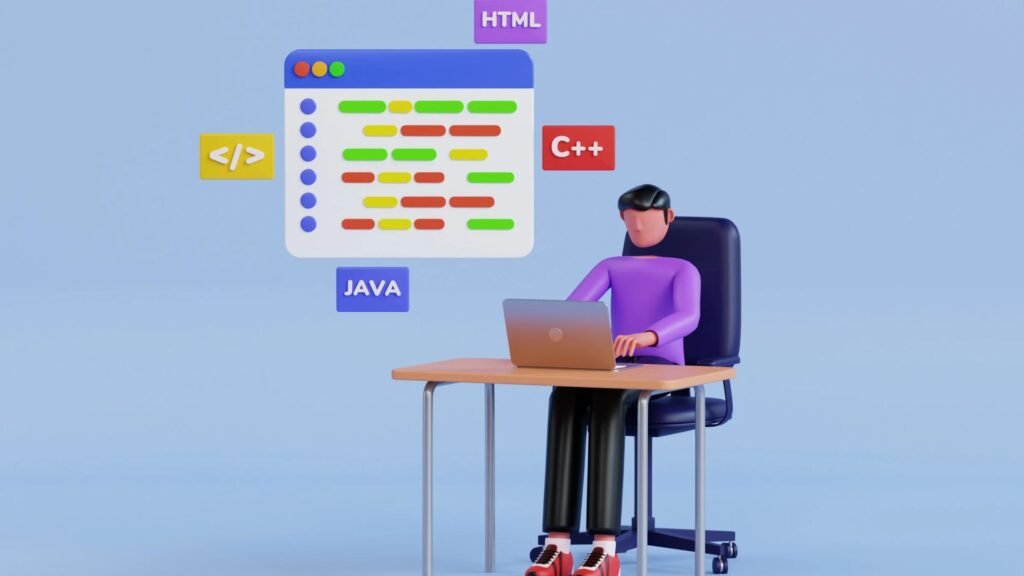
Every app you use, from a food delivery service to a banking dashboard, is built by people who understand both what users see and what happens behind the scenes. Those people are full stack developers, and the demand for them remains strong across startups, product companies, and service firms.
If you are a fresher, the path can feel overwhelming. There are dozens of languages, frameworks, and opinions on where to start. This roadmap cuts through that noise and shows you what to learn, in what order, and how to become employable.
What a Full Stack Developer Actually Does
A full stack developer works on both sides of a web application. The front end is everything a user interacts with: layouts, buttons, forms, and animations. The back end is everything hidden from view: servers, databases, business logic, and security.
You do not need to be the world’s best at every layer. You need to understand how all the pieces connect, and be able to build a working product from start to finish. That ability to see the whole picture is what makes full stack developers so valuable to small and growing teams.
Start with the Web Fundamentals
Before any framework, learn the three building blocks of the web. HTML structures a page, CSS styles it, and JavaScript makes it interactive. Spend real time here. Many freshers rush past the basics to reach popular frameworks and then struggle when something breaks.
A good way to learn is to build small things: a personal portfolio page, a landing page, a simple calculator. The MDN Web Docs are the most trusted free reference for all three, and they are worth bookmarking from day one.
Get Comfortable with JavaScript
JavaScript is the center of the full stack journey. Learn variables, functions, arrays, objects, and especially asynchronous code, including promises and async/await. These ideas appear in almost every interview and every real project.
Once you are confident, move to a front-end library. React is the most common choice in the job market, and it teaches you to think in reusable components. Build a few small apps, such as a to-do list, a weather viewer, or a quiz, before attempting anything larger.
Learn the Back End
Now cross to the server side. Node.js with Express lets you keep using JavaScript, which makes the transition smooth. Other fresher-friendly options include Python with Django or Java with Spring Boot, so pick based on what local employers hire for.
Focus on understanding how to build REST APIs, handle requests and responses, manage authentication, and validate input. Security basics matter more than most beginners realize, so read the OWASP guidance on common web vulnerabilities early on.
Understand Databases
Every real application stores data. Learn a relational database such as MySQL or PostgreSQL, and get comfortable writing queries with joins and filters. Then explore a document database like MongoDB so you understand when each type fits best.
Do not skip database design. Knowing how to structure tables and relationships will set you apart from candidates who only know how to copy queries.
Learn Git and Basic Deployment
Professional developers work in teams, and teams use version control. Learn Git well enough to branch, commit, merge, and resolve conflicts, and keep your projects on GitHub. Then learn to deploy something live. A project that runs on a public URL is far more convincing than one that only works on your laptop.
Picking up the basics of APIs, environment variables, and simple cloud hosting at this stage will make you feel far more like a working developer.
Build Projects That Prove Your Skills
Certificates open conversations, but projects win interviews. Aim for three or four solid applications rather than a dozen half-finished ones. Good examples include an e-commerce store with a cart and payments, a job board with user accounts, a blogging platform with comments, or a booking system with a dashboard.
For each project, write a clear readme, explain the technical decisions you made, and be ready to discuss what went wrong and how you fixed it. Interviewers care about your thinking as much as your code.
Should You Learn on Your Own or Join a Program?
Self-study works for disciplined learners, and free resources are excellent. The challenge is structure, feedback, and accountability. Many freshers lose months jumping between tutorials without building anything substantial.
If you prefer guided learning, look carefully at the options. When comparing the Best software training institute in Bangalore, ignore the marketing and ask practical questions. Is the curriculum updated for current tools? Do you build real, deployable projects? Are the trainers working professionals? A reputable Software training institute in Bangalore should be happy to show you sample projects and let you speak with past students.
The same applies when exploring the Best IT training institute in Bangalore. The right choice offers small batches, plenty of hands-on practice, and mentors who review your code rather than just lecture. You can see how a structured program is laid out on our full stack development course page.
What About Placement Support?
For freshers, career support matters as much as technical teaching. Software training with placement assistance should mean more than a promise. Look for resume reviews, mock technical interviews, aptitude and communication practice, and genuine connections with hiring companies.
Be cautious of anyone who guarantees a job. No honest institute can do that. What a good one can do is prepare you thoroughly and open doors. To understand what real support looks like, read about our placement assistance process.
A Note for Engineering Graduates
If you hold a B.E. or B.Tech degree, you already have a useful base in logic and problem-solving, whatever your branch. Many job oriented courses for engineering graduates are designed to bridge the gap between academic knowledge and what employers actually need. Full stack development is one of the most accessible of these, because it does not require a computer science background, only consistent practice.
If you are still weighing different directions, our guide to choosing the right IT career path can help you compare options.
Prepare for Interviews
Fresher interviews usually test three things: fundamentals, problem-solving, and project understanding. Revise JavaScript concepts, practice basic data structures and algorithms, and know your projects inside out. Platforms such as freeCodeCamp offer free practice and structured lessons that keep your skills sharp while you apply.
Also work on communication. Being able to explain a technical idea in plain language is a skill many candidates overlook, and it often decides close interviews. If you want to see which skills employers value most, browse our software training programs for current curriculum topics.
A Realistic Timeline
For a motivated beginner studying consistently, expect roughly six to nine months. The first two months go to HTML, CSS, and JavaScript. The next three cover React, back-end development, and databases. The final stretch is for projects, deployment, and interview preparation. Prior coding experience can shorten this considerably.
Progress is rarely smooth. You will feel stuck, then suddenly something clicks. Treat the frustration as part of the process, not a sign you are unsuited to it.
Conclusion
Becoming a full stack developer as a fresher is entirely achievable, but it rewards patience and consistency over shortcuts. Learn the fundamentals properly, build real projects, understand how front end, back end, and databases fit together, and practice explaining your work clearly.
Whether you learn independently or choose a structured program such as ISM UNIV, focus on depth over speed. A good program gives you guided practice, mentor feedback, and project experience, which can help you build skills faster than studying alone. Employers hire people who can build, debug, and think, not people who have merely watched courses. Start small, keep shipping projects, and let your portfolio do the talking.